Which UMAREX PAC Compressor Is Right for You?


UMAREX’s PAC range has quickly become one of the most talked-about compressor line-ups in PCP shooting, largely because they’ve sensibly designed different compressors for different users, rather than one machine does everything at a high price.
From super-portable battery units to workshop compressors and silent home-friendly options, there’s now something for nearly every shooter.
The trick is working out which one actually suits how you shoot.
At a Glance Comparison*
PAC 400 | PAC 900 | PAC ECO Silent | PAC 1100 | PAC 1400 | |
 |  |  |  |  | |
Power Source | 18V battery | 230V mains | 230V mains | 230V mains + 12V vehicle | 230V mains + dual 18V battery system |
Portability | Very high (ultra portable) | Low (bench unit) | Low | Medium (vehicle capable) | Very high (field + mains + battery) |
Weight (Approx) | 6.1kg | 6.6kg | 6.3kg | 10.2kg | 9.3kg |
Air Process Rate (FAD) | 4 L/min | 7 L/min | 1 L/min | 11 L/min | 14 L/min |
Max Pressure | 300 bar | 300 bar | 300 bar | 300 bar | 300 bar |
Typical Fill Capacity | Up to ~1L systems | Up to ~1L systems | Up to ~1L systems | Up to ~3L tanks | Up to ~3L tanks |
Noise Profile | Standard | Standard | Very quiet operation focus | Standard | Standard |
Cooling / System Type | Oil & water free | Oil & water free | Oil & water free | Oil & water free | Oil & water free |
Filtration | Replaceable sponge filter | Replaceable filter sponge | Built-in water Trap | Replaceable filter sponge | Replaceable filter sponge |
Display / Controls | Digital with auto shut-off | Digital with auto shut-off | Digital with auto shut-off | Digital with auto shut-off | Digital with auto shut-off |
Intended Use Case | Field topping / mobile rifle use | Home workshop filling | Indoor / quiet home overnight filling | Mixed home + vehicle + larger systems | Full flexibility mobile + home + remote shooting |
Price | £425 | £370 | £320 | £585 | £800 |
Key Takeaways (What the table actually tells you)
PAC 400
This is your grab-and-go compressor. Designed purely for portability and rifle-level fills, not bottle ecosystems or heavy workshop use.
Good for:
Field shooters
Ratting / pest control
Lightweight kit users
PAC 900
This is the baseline home compressor.
It does one job well:
sit on a bench
plug in
fill rifles
No drama, no mobility, just consistent use at home.
PAC ECO Silent
The only real “specialist” in the range.
Its entire identity is:
reduced noise output
home-friendly operation
more comfortable indoor use
If you’re in shared spaces or just don’t want a compressor sounding like it’s auditioning for a construction site, this is the one.
PAC 1100
This is where things start getting properly flexible.
Key upgrades:
12V vehicle compatibility
larger fill capability (up to ~3L systems)
This is the utility player of the range.
If you want one compressor that does:
home
car
range trips
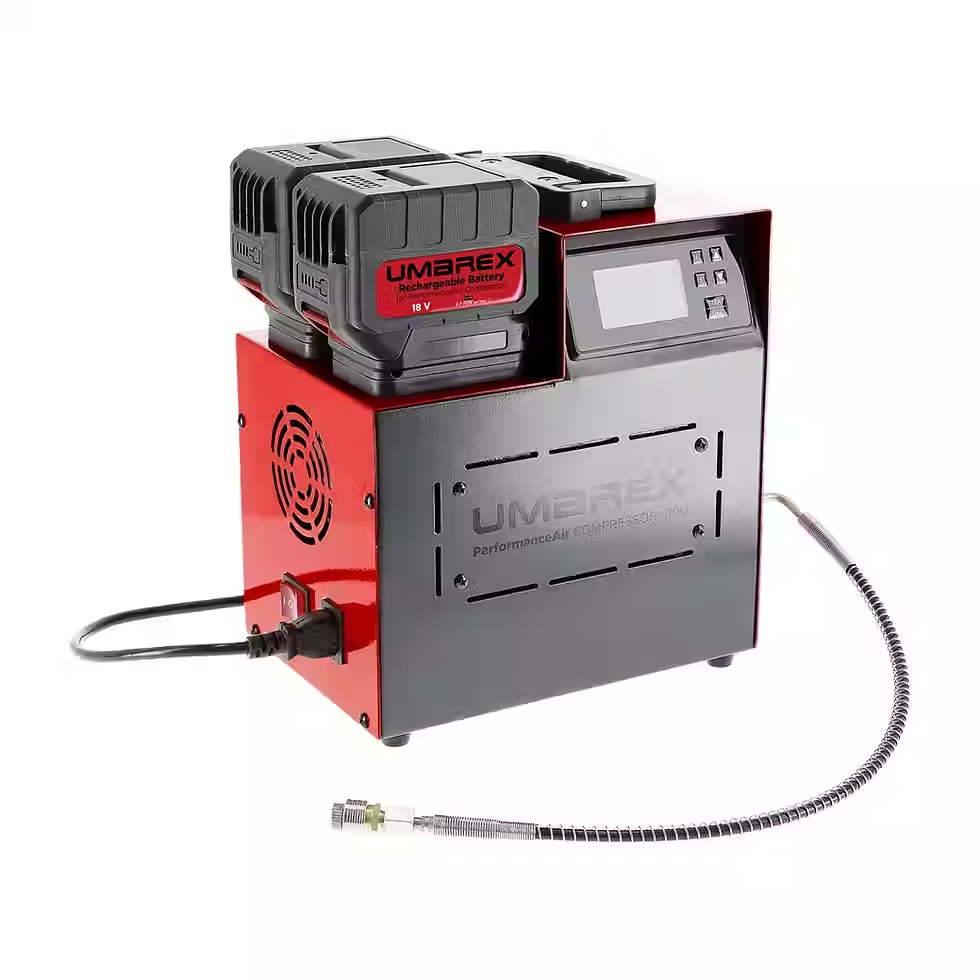
This is the logical step up from cheaper compressors on the market or freeing yourself from bottles.
PAC 1400
The “do almost everything anywhere” option.
Key points:
Dual battery system + mains
Full mobility focus
Large system fill capability
Highest independence of the range
This is the closest thing here to a true field/workshop hybrid compressor.
The Important Reality Check (Moisture & Drying)
Now the bit nobody likes hearing, but absolutely needs to be said.
Across the entire PAC range:
There is no true dedicated drying medium system
Filters and sponges are present, but they are basic particulate/moisture reduction only
That means:
Even though these compressors are very capable, you should still expect to potentially invest in:
Desiccant drying systems
External air drying solutions for bottles or high-use setups
Because in real terms:
The small built-in filters are not a substitute for proper air drying
They’ll help a little, but they are not designed to fully prevent moisture buildup in long-term PCP use.
Bottom Line
The PAC range isn’t “one compressor in five shapes”.
It’s actually:
PAC 400 → portability
PAC 900 → home simplicity
PAC ECO → quiet specialist
PAC 1100 → hybrid workhorse
PAC 1400 → full mobility flagship
Pick based on how and where you actually fill, not just pressure numbers.
Because on paper, they all compress air. In reality, they solve very different problems.
--------------------------------------------------
Think we missed something? Let us know in the comments below.
---------------------------------------------------
Image Use for Educational Purposes - This blog post includes images used for educational purposes, not all of which are not owned by the publisher. Efforts have been made to credit image owners/sources appropriately, and any concerns about attribution or copyright should be addressed by contacting us. These images are used solely for educational purposes within fair use guidelines, with no commercial intent. The inclusion of external images does not imply endorsement or sponsorship of our content by image owners/sources. We aim to comply with relevant copyright laws.


900 VS ECO - one is slower but cheaper and quieter. Considering its at home, time to fill isnt on a critical path, so when does the 900 overtake the ECO, other than if your constantly impatient ?
All good information and food for thought.